
Best pokies in Tasmania: venue checks and claims
 Available in AU
Listings may show usual hours without confirming that the venue—or its pokies facilities—is operating at the planned visit time.
- Checking Whether a Tasmania Venue Is Open
- What “Best Paying” Can—and Cannot—Mean
- Getting to a Venue from the Airport or CBD
- Venue Oversight and Responsible-Gambling Requirements
- Online Play, the Spirit of Tasmania, and What Can Be Verified
- Why Venue Opening Hours Cannot Be Assumed
- How to Read Claims About Tasmania Pokies
- Pokies in the CBD: Venue Data and Its Limits
- Cashless Pokies and Newcastle Searches
Checking Whether a Tasmania Venue Is Open
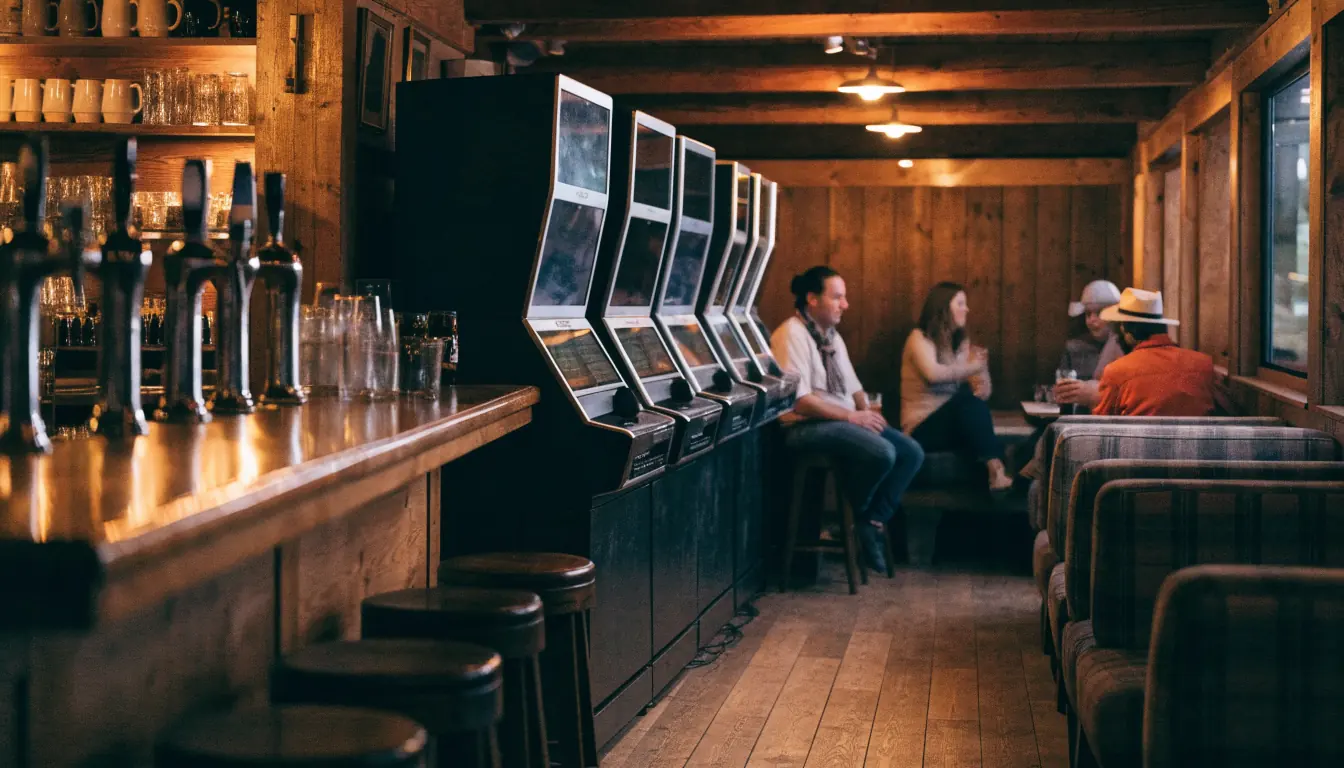
An online listing can be a useful starting point, but it is not confirmation that a venue is open at the time of a planned visit. Opening information can be out of date, and a general venue listing may not answer whether the relevant facilities are operating. For an immediate decision, the dependable check is with the venue itself.
That distinction matters when a search is framed around Tasmania pokies being open now. A result may show a venue’s usual hours without confirming its status on the day, or it may refer to the venue as a whole rather than the area where pokies are available. The two questions are separate: whether the venue is open, and whether the intended activity is available during that visit. Both should be confirmed directly.
Confirm before setting out
The most direct method is to contact the venue and ask about the planned arrival time. A brief call can establish whether it is open then and whether the relevant facilities are operating. If a venue publishes current updates through its own website or an official social account, those can also be checked, but a dated listing or an old post should not be treated as a live confirmation.
The wording of the question can make the answer more useful. Rather than asking only whether the venue is open, ask whether it will be open at the intended time and whether the pokies area will be operating then. If the visit depends on a particular day, mention that day; a general answer about regular hours may not cover a changed schedule.
A clear response is more valuable than a timetable copied across several directories. If the venue cannot confirm the relevant details, the practical status remains uncertain. Planning around an assumption does not make that assumption more reliable.

Treat opening information as time-specific
Opening status is tied to a particular date and time. A result viewed earlier may not reflect a later change, and a schedule described as regular hours is not the same as confirmation for a specific visit. This is especially relevant when the intended visit is early or late, when a small difference in operating arrangements can determine whether the trip is worthwhile.
Searches for early-morning or late-night pokies can produce pages that appear precise while answering a different question. Some may show ordinary venue hours; others may describe a broad category of business rather than the actual venue being considered. Neither establishes that pokies will be operating at the required time. The venue’s own confirmation is the useful final check.
Where a venue gives different information across its channels, the discrepancy should be resolved directly rather than settled by choosing the more convenient listing. A directory may retain old details, while a social post may refer to a one-off change. The person responsible for answering the venue’s current enquiries is better placed to clarify which information applies.
Check the exact venue
Tasmania is not a single venue listing. A result that mentions the state does not identify which premises it refers to, and similarly named businesses can be easy to confuse. Before relying on any opening information, confirm the venue’s exact name and that the contact details belong to that venue. A broad result for “pokies in Tasmania” is not a substitute for checking the premises intended for the visit.
A search result using a prominent casino name also needs the same basic verification. A name appearing in a result does not, by itself, establish that a corresponding Tasmania venue is open or that the search result refers to local premises. The relevant check is still the exact venue’s own current information.
- Contact the venue directly
- Ask if the pokies area will be operating at the intended time
- Confirm the venue’s exact name and address
- Rely on online listings for live confirmation
- Treat old social media posts as current updates
- Assume a broad result for “pokies in Tasmania” identifies a specific venue
If an answer is limited to “the venue is open,” it may not settle whether the area of interest is operating. If it confirms only regular hours, it may not settle the status for the intended visit. Asking both questions avoids treating a partial answer as a complete one.
Make the decision on confirmation, not inference
For a visit planned around pokies, the useful standard is straightforward: current confirmation from the venue for the intended time, covering both access to the premises and operation of the relevant area. General listings, old reviews and search snippets can help identify a place to contact, but they do not replace that check.
If direct confirmation is unavailable, the decision is not supported by a reliable answer. A listed schedule may still be correct, but it is an estimate for planning purposes, not proof of present availability. That distinction keeps an ordinary trip from being built on a status that has not been checked.
What “Best Paying” Can—and Cannot—Mean
Choosing online pokies for Tasmania in 2026 calls for a close look at the details available for each operator. Use this list as a starting point, and check current terms and availability before signing up.
License: Curacao Gaming Control Board JustCasino is listed with a Curacao Gaming Control Board license.
License: Curacao, operated by Dama N.V. 7Bit Casino is listed as operating under a Curacao license, with Dama N.V. as its operator.
License: Curacao (operating since 2017) · Min. deposit: A$20 Uptown Pokies has operated since 2017 and lists a minimum deposit of A$20.
License: Curacao · Min. deposit: A$20 (POLi) Lucky Dreams lists a Curacao license and a minimum deposit of A$20 via POLi.
License: Curacao eGaming OGL/2023/174/0082 (Dama N.V.) · Min. deposit: A$15 LevelUp Casino lists Curacao eGaming license OGL/2023/174/0082, held by Dama N.V. Its minimum deposit is A$15.
License: Curacao eGaming OGL/2024/923/0383 (Antillephone N.V.) · Min. deposit: A$30 WinSpirit Casino lists Curacao eGaming license OGL/2024/923/0383, held by Antillephone N.V. Its minimum deposit is A$30.
Payout speed: crypto ~90 minutes, fiat 1-5 days · Min. deposit: A$30 Kingmaker lists a minimum deposit of A$30. Its stated payout speeds are around 90 minutes for crypto and 1–5 days for fiat.
License: Curacao Gaming Control Board OGL/2023/176/0095 (Hollycorn N.V.) Rollero Casino is listed with Curacao Gaming Control Board license OGL/2023/176/0095, held by Hollycorn N.V.
License: Curacao Gaming Control Board OGL/2023/176/0095 (Hollycorn N.V.) GoldenCrown is listed with Curacao Gaming Control Board license OGL/2023/176/0095, held by Hollycorn N.V.
License: Curacao Golden Pokies is listed with a Curacao license.
“Best paying” sounds like a ranking, but a game’s name or reputation cannot establish what return applies at a particular casino. A specialist review reports that some game providers let casinos choose among multiple return-to-player (RTP) settings for the same pokie. If that arrangement applies, the same title can have different stated return percentages in different venues. A familiar name, therefore, is not enough to identify the setting in use.
RTP is a percentage used to describe a game’s theoretical return. It is not a promise about the result of an individual spin, a session or a visit. Nor does a title’s popularity prove that its RTP setting is higher than another game’s. Without a confirmed setting for the particular game at the particular casino, a comparison based on names alone has no dependable basis.
That distinction matters when assessing claims about the best pokies in Tasmania in 2026. A list presented as a ranking of paying games would need comparable, venue-specific RTP information for each entry. A title appearing in a casino, or being described as popular, supplies neither the selected RTP setting nor evidence that it offers a better return than another title. The word “best” cannot fill that gap.

The same limitation applies to comparisons between Tasmania venues. A game’s published return cannot automatically be carried from one casino to another if the provider permits different settings. A figure associated with a title in one place would not establish the setting for that title elsewhere. Without confirmation of the relevant setting, a claim that one Tasmania casino’s pokies pay better than another’s remains unsubstantiated.
The Random Number Generator adds a separate limit. Each pokie spin is an independent random event determined by an RNG. A previous loss does not make a win due on the next spin, and a previous win does not establish that another will follow. Short runs of results cannot demonstrate that a machine is paying above or below its stated RTP. Random outcomes can vary; independence means one result does not set the next result.
This also explains why observed outcomes are a poor basis for ranking games. A single session records what happened during that session, not a dependable comparison of the underlying settings. A streak may be memorable, but it does not verify a higher return. Equally, a losing run does not by itself show that a game’s stated setting has changed. The mathematical setting and the immediate result answer different questions.
Each pokie spin is an independent random event determined by a Random Number Generator (RNG), meaning previous results do not influence future outcomes.
For anyone comparing Tasmania casino pokies, the useful distinction is between a claim about a game title and evidence about the configuration at a specific venue. A provider’s game may be available with more than one RTP setting; the setting selected by a casino is the relevant detail for a venue-level comparison. General descriptions, reputation and anecdotes cannot substitute for that information. Where the setting is not confirmed, the return comparison cannot be completed responsibly.
The phrase “best paying pokies in Tasmania” therefore has a narrow factual answer: no title can be identified as best from its name alone. A defensible comparison would require verified, comparable RTP settings for the games at the venues being assessed. Even then, RTP describes theoretical return rather than a guaranteed result for any individual. Independent spins remain independent, regardless of a game’s reputation or a player’s recent results.
This standard applies whether the subject is a city venue, a casino elsewhere in Tasmania or a broad discussion of pokies in the state. Location does not resolve uncertainty about a game’s selected setting, and a title does not establish a venue’s configuration. The practical conclusion is not a list of winners, but a limit: without setting-specific evidence, claims that a particular game or venue pays best are not established.

Getting to a Venue from the Airport or CBD
A venue described as “near Tasmania” is not necessarily near an airport, a central business district or the town where a trip begins. Tasmania is a state, not a single point on a map. A useful route starts with a specific airport or CBD and ends at a confirmed street address; without the destination address, any distance or travel time is guesswork.
Airport searches need particular care because “the airport” may mean different places. The relevant airport is the one on the itinerary, and the route should be checked from its actual terminal or pickup point. A result labelled as airport-adjacent does not establish how far away it is, whether the journey is direct or what transport is available. Those details depend on the address and the route selected.
The same applies to CBD searches. A CBD is a location within a particular town or city, not a state-wide reference point. A venue near one CBD may be a poor fit for someone staying in another part of Tasmania. A broad search for nearby pokies can return results without showing that the venue is close to the intended starting point.
Route Verification
Use the venue’s complete street address instead of a regional or “nearby” description.
Select the specific airport terminal, accommodation address, or CBD street where the trip begins.
Check driving directions or public-transport routes to ensure the journey is practical.
For north Tasmania, the same distinction matters: a regional label does not supply a street address or show the distance from a particular town. Search results can help identify possible destinations, but they do not replace checking the venue’s full address and mapping the journey from the actual departure point. A pin on a map is useful only if it corresponds to the venue itself rather than a general area or a nearby landmark.
A practical route check has three parts:
- Confirm the destination. Use the venue’s complete street address, rather than relying on a regional or “nearby” description.
- Set the correct starting point. Choose the airport terminal, accommodation address or CBD street from which the trip will begin.
- Review the route for the intended mode of travel. Driving directions and public-transport routes are not interchangeable; a distance alone does not show whether a journey is practical.
These checks also prevent a common category error: “pokies at the airport” can mean machines inside an airport, or venues somewhere near an airport. A location label cannot settle that distinction. The venue address is needed to determine whether the destination is actually within the airport or elsewhere.
Tasmania-wide listings are therefore a weak basis for choosing a destination by proximity. A local result should be treated as a candidate until its exact address can be matched to the intended origin on a map. Travel time should be assessed for the route and transport mode in use, rather than inferred from words such as “near” or “central”. That keeps the decision tied to a real journey instead of a broad geographic label.
Venue Oversight and Responsible-Gambling Requirements
A venue’s reputation, machine-floor size and operating procedures are separate considerations. A label such as “best pokies venue” does not establish how a venue handles gambling-related risks. The relevant operational question is whether the required safeguards apply and are in place when gaming machines are being used.
A report by regionriverina.com.au describes a rule requiring venues with more than 20 gaming machines to have a dedicated responsible gambling officer (RGO) on duty whenever those machines are operating. The threshold is based on the number of machines at the venue; the duty is tied to their operation. It is therefore not simply a general staffing measure or a role that matters only when a concern has already been raised.
The report also describes a requirement for venues to maintain a gambling incident register. The register is intended to capture occurrences, including situations where a patron’s behaviour suggests that gambling may be causing harm or placing them at risk of it. This creates a record of incidents rather than leaving each concern as an isolated interaction on the floor.
These safeguards perform different functions. The RGO requirement assigns an on-duty responsibility at larger machine venues while machines are running. The incident register records relevant occurrences. One is about designated coverage; the other is about documenting events. Neither, on its own, establishes that a particular venue has better pokies, better returns or a superior player experience.
For someone comparing venues in Tasmania, these points offer operational context, not a ranking. A venue’s machine count may determine whether the staffing threshold is relevant, but that number does not indicate how any individual pokie performs. Nor does the existence of a register provide a public measure of machine fairness or payout outcomes. Those are distinct claims and should not be inferred from compliance arrangements.
The wording of the reported requirement also matters: the RGO is to be present while the machines operate, not merely somewhere on the premises at another time. The register, meanwhile, concerns incidents and behaviours that indicate possible gambling harm. Treating these as interchangeable would obscure what each safeguard is meant to cover.
No conclusion about a particular Tasmania venue follows from these rules alone. They do not identify which venues meet the threshold, confirm individual staffing arrangements, or supply a basis for naming a best venue. They describe the responsibilities attached to machine-floor operations. A venue comparison that goes beyond those responsibilities would need reliable venue-specific information, rather than reputation or an unsupported claim of superiority.
Operational Safeguards
- Venues with over 20 machines must have a dedicated responsible gambling officer on duty during operation.
- Gambling incident registers are required to document behaviours suggesting gambling harm.
- These operational requirements are separate from machine performance or payout results.
Online Play, the Spirit of Tasmania, and What Can Be Verified
Questions about pokies aboard the Spirit of Tasmania concern a ferry service, not a land-based venue in Tasmania. The ferry’s name, or a search result that pairs it with gambling terms, does not establish that pokies are available on board. That claim would need confirmation from the ferry operator. Without it, onboard availability should not be presented as a feature of the crossing.
The same distinction applies to searches combining Tasmania with a casino name. A phrase such as “Crown” and Tasmania does not, by itself, confirm a local casino, its ownership, or the machines it offers. Search wording is not venue evidence. A physical venue’s own current information is the relevant place to confirm whether it operates and what facilities it provides; an online casino listing cannot establish the details of a Tasmanian gaming floor.
Online play is a separate issue, governed by Australian law rather than by the location of a ferry or a physical venue. Under the Interactive Gambling Act 2001, companies cannot lawfully offer real-money online pokies to people in Australia without a domestic licence. No domestic licences for online casinos have been issued, so there is no Australian-licensed online casino. The legal position does not change because a service describes itself as available in Tasmania, accepts Australian customers, or uses a bonus to attract registrations.
That distinction matters when an online offer is described as “no deposit.” The wording refers to the offer’s terms, not to legal authorisation in Australia. A bonus does not turn an online casino into a locally licensed service, and the absence of an upfront deposit does not remove the risks attached to an offshore operator. Nor does the word “real money” make an online service equivalent to a physical venue with pokies. The two are different products, with different legal circumstances.
Australian players are not the parties targeted by the law’s prohibition on providing these services. However, that does not create a domestic safeguard for funds held by an offshore casino. If an offshore operator refuses to pay winnings, an Australian player has no legal recourse in Australia to recover them. The distinction is material: a service may accept a player while leaving that player without an Australian route to resolve a disputed payout.
Claims about online pokies “near Tasmania” can also confuse geography with jurisdiction. A website’s location, a server’s location, or a label suggesting proximity does not make the service an Australian-licensed casino. There is no Australian-licensed online casino to select, and describing an offshore site as local does not alter the law. This is why an online listing should not be treated as evidence of a nearby physical venue or of local regulatory protection.
For the same reason, promotional labels should not be read as proof of safety or payment certainty. “No deposit,” “Tasmania,” and “real money” may appear together in an offer, but none establishes that the operator can lawfully provide online pokies in Australia or that winnings can be enforced through Australian legal channels. The bonus headline is packaging; the legal status and the available remedy determine the substance.
Legal Risk
Under the Interactive Gambling Act 2001, there are no Australian-licensed online casinos; players using offshore operators have no legal recourse in Australia to recover disputed winnings.
A physical venue search requires different verification. A ferry is not automatically a casino, and an online casino is not automatically a Tasmanian venue. If the question is whether a ferry carries pokies, only a current statement from the ferry operator can substantiate that. If the question concerns a land-based casino or club, the venue itself must confirm its identity and facilities. A website offering online games cannot fill either evidence gap.
Accordingly, “best paying” in an online context should not be treated as a reliable route to a local machine recommendation. The phrase does not establish that a game is available at a Tasmanian venue, that a named casino operates in the state, or that an online provider is authorised to serve Australian residents. Those are separate claims and require separate evidence. The legal position is clearer than any promotional wording: real-money online pokies cannot be lawfully offered to Australians by companies without a domestic licence, and no such online-casino licences have been issued.
The practical boundary is simple. Ferry availability must be confirmed with the ferry operator; physical casino details must be confirmed with the venue; and online promotional claims do not establish an Australian licence. Where an offshore casino is involved, refusal to pay winnings cannot be taken to an Australian legal remedy. A search result may combine all these subjects, but it cannot make them interchangeable.

Why Venue Opening Hours Cannot Be Assumed
The presence of pokies at a venue does not establish that the venue operates around the clock. Machine availability and premises opening hours are separate matters: the first describes what is offered inside, while the second describes when the venue admits patrons. A listing that mentions pokies cannot, by itself, support a claim of continuous access.
“Twenty-four-hour pokies” can also blur two different ideas. It may refer to machines being available throughout a venue’s operating day, or it may imply that the venue itself remains open at every hour. Those are not equivalent. Without a confirmed schedule for a particular premises, neither interpretation establishes round-the-clock access in Tasmania.
Opening-hour details need to be tied to the venue, not inferred from the type of business or from the fact that it has gaming machines. A venue’s trading arrangements may also differ from the hours of particular facilities within it. A general statement about a venue therefore does not necessarily establish when its gaming area is accessible.
This distinction matters when planning late-night activity. A search result, directory entry or old listing may present a broad description without showing whether it reflects current trading arrangements. Treating such a description as proof of continuous opening turns an unconfirmed assumption into a travel plan. The inconvenience is practical; the underlying error is treating a machine feature as an operating schedule.
The phrase “open all night” should consequently be read as a specific claim about premises access, not as a synonym for having pokies. The same applies to references to late trading: they do not establish that a venue is open without interruption. A schedule is useful only when it identifies the relevant venue and the hours that apply to it.
Attention A listing mentioning the presence of pokies does not guarantee the venue operates 24 hours or that gaming machines are accessible at all hours.
Nor can a statewide pattern of pokies opening hours be inferred from the presence of machines. That leaves no sound basis for treating continuous access as the default. The defensible distinction is simple: pokies may be part of a venue’s offering, but their presence says nothing conclusive about how long that venue trades.
A reliable description of hours should therefore be venue-specific and current. Broad labels are not substitutes for a stated schedule, and a machine listing is not a timetable. Until the premises’ own operating arrangements are established, “24-hour” remains an unverified description rather than a dependable statement about access.
How to Read Claims About Tasmania Pokies
Claims about pokie performance need to be read as claims about a particular setting, not as a guarantee attached to a game title or a Tasmanian venue. A specialist review reports that some providers let casinos choose between different RTP settings for the same pokie. Where that option is used, the game’s title alone does not establish which return percentage applies at a particular casino.
That distinction matters when two descriptions appear to refer to the same game. A stated RTP may describe one available setting; it does not, by itself, confirm the setting selected at every venue. A comparison is meaningful only when the figures refer to the same game and the applicable settings are identified. Without that detail, a higher-looking percentage is not enough to show that one machine on a Tasmanian floor offers better terms than another.
RTP also does not predict the result of an individual play. Each spin is a separate random event determined by a Random Number Generator. A previous win or loss does not make the next spin due to produce a particular result. Nor does a run of outcomes prove that a machine’s setting has changed. Random sequences can look uneven over a short period; that appearance is not evidence of a reliable pattern.
This is why broad labels such as “best” are weak evidence on their own. They may refer to a game’s name, a published return setting, or a venue claim, but those are not interchangeable. A title does not identify the setting in use, and a setting does not promise a result for an individual spin. Performance claims need enough detail to show what is being compared.
Maximum bet and maximum cash payout are separate questions from RTP. A return percentage does not state the permitted stake or the largest amount that can be paid in cash. Those terms require their own machine- or venue-specific information; they cannot be calculated from the game title or from an RTP figure.
The same restraint applies to claims about pokies in Tasmania generally, including claims tied to a particular place. A game-level description cannot establish how a specific venue has configured its machines. Without comparable, venue-specific details, confident rankings convey more certainty than the underlying information supports. The useful distinction is simple: settings describe one part of a game’s terms; the Random Number Generator determines each spin independently.
Understanding RTP and RNG
Return-to-Player (RTP) is a theoretical percentage of return over time, not a guarantee for individual sessions. Because providers may offer different RTP settings for the same game, the specific configuration chosen by the venue is the only relevant metric for comparison.
Pokies in the CBD: Venue Data and Its Limits
CBD and club venues are often compared by name, location or the range of pokies they offer. Those details do not establish how a machine performs, and a venue’s reputation is not a measurable return figure. A useful comparison needs information that applies to the particular machine and setting, rather than a broad label such as “best”.
Venue oversight provides a different kind of information. A report by regionriverina.com.au describes a requirement for venues to keep a gambling incident register. It records events such as a patron displaying behaviour that suggests gambling harm may be affecting them or placing them at risk. The register is an operational record, not a ranking of venues or a measure of the odds or returns of their pokies.
That distinction matters when assessing claims about clubs in central business districts. An incident register can document responses to concerning events; it cannot show that one club’s machines pay more often, or that a particular venue offers better results. Nor does the existence of a reporting process prove that a venue is suitable for every person. These are separate questions with separate evidence.
Staffing obligations are also distinct from record-keeping. The same report describes a requirement for a dedicated Responsible gambling officer (RGO) to be on duty while machines operate at venues with more than 20 gaming machines. That threshold relates to staffing; it does not determine whether an incident register is required, and it does not identify which CBD clubs meet the threshold. Treating the two controls as interchangeable would obscure what each is designed to do.
For people considering self-exclusion, it is important not to confuse a venue’s incident records with an individual exclusion arrangement. Deposit limits, loss limits, session time limits and self-exclusion are responsible-gambling tools, but a venue register is not itself a self-exclusion system. The register documents incidents; it does not, by that fact alone, establish who has opted out or how an exclusion operates across venues.
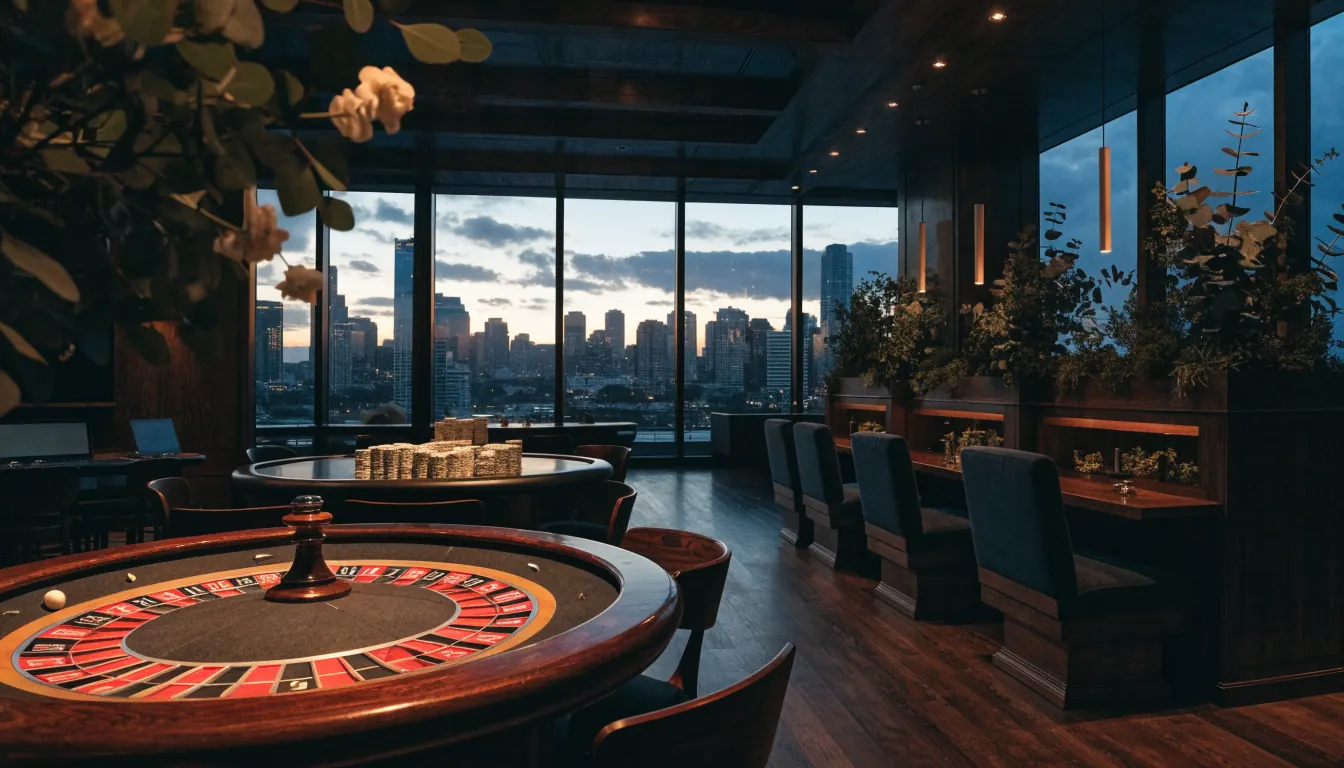
A sound account of pokies in a Tasmania CBD venue therefore separates three things: the venue’s identity, its machine offering and its responsible-gambling procedures. The reporting measure concerns recorded incidents, while the RGO rule concerns on-duty staffing at larger machine venues. Neither provides a basis for naming a “best” club by machine performance. That would require comparable, machine-specific performance information—not an operational safeguard presented as a payout result.
Cashless Pokies and Newcastle Searches
Cashless play is a specific payment feature, not a general description of pokies. A venue would need to confirm whether its machines accept a cashless method, what method is supported and whether the feature applies across the floor. A cashless payment option should not be taken as evidence about a machine’s return settings or the quality of a venue.
The same distinction matters when a venue is described as being in Newcastle, Tasmania. A place name alone is not enough to establish which venue is meant. An exact venue name and street address are needed before travel plans or claims about its facilities can be assessed. No particular Newcastle venue or cashless machine arrangement can be identified from the name alone.
PayID is a transfer alias linked to Australia’s New Payments Platform; it is not, by itself, proof that a physical pokie accepts cashless payments. Online payment options and machine-floor payment arrangements are separate matters. Treating one as confirmation of the other would collapse two different systems into one claim.
For an in-person visit, the relevant details are the venue’s own current information: its address, whether pokies are available, and whether any cashless option is supported. Those are venue-specific facts, not features that can safely be inferred from a search phrase or from the existence of PayID. Until the venue confirms them, a claim that a Tasmanian pokie is cashless—or that a named Newcastle venue offers it—should not be used as a basis for choosing where to play.
What does “wagering requirement” actually mean?
It is the amount you must wager before bonus winnings can be withdrawn. For example, a $500 bonus with a 40x requirement means $20,000 in bets; if the requirement applies to the deposit plus bonus, the amount wagered can be higher.
What’s the best strategy for playing pokies?
No strategy can change the outcome of a spin: each one is an independent random event. You can use deposit, loss and session-time limits to manage your gambling.
Can casinos change the RTP of their games?
Some game providers let casinos choose from multiple RTP settings for the same game, so its stated return can vary between casinos. Check the RTP setting for the specific game at the venue you plan to use.
Are online pokies legal for Australian players?
Australians can legally play on offshore sites that accept them, but offering real-money online pokies to Australians without a domestic licence is illegal, and no Australian online casino licences have been issued. Players have no legal recourse in Australia if an offshore casino refuses to pay winnings.
Prepared by the Weedspin Casino editorial staff.